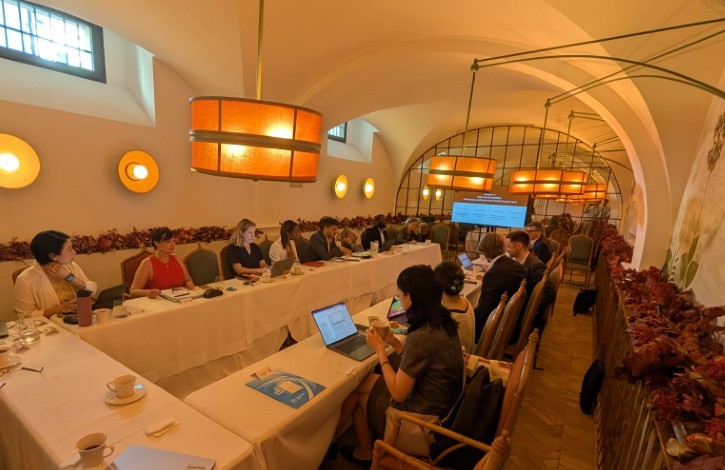
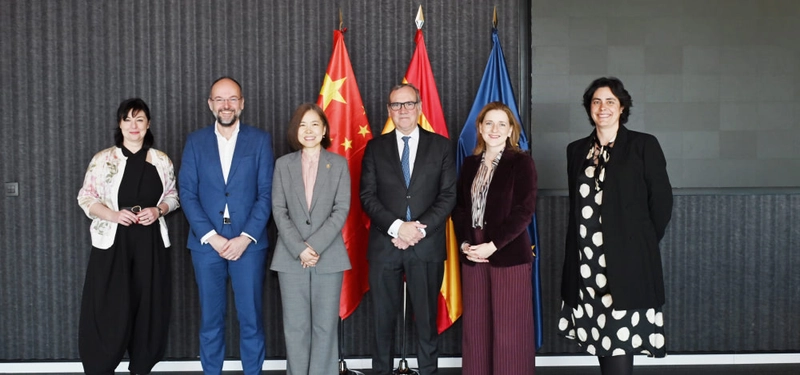
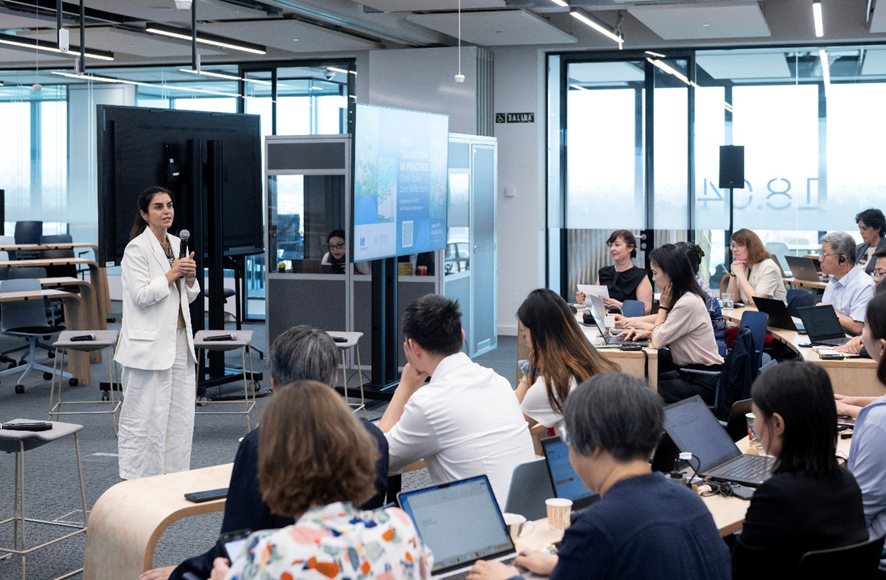
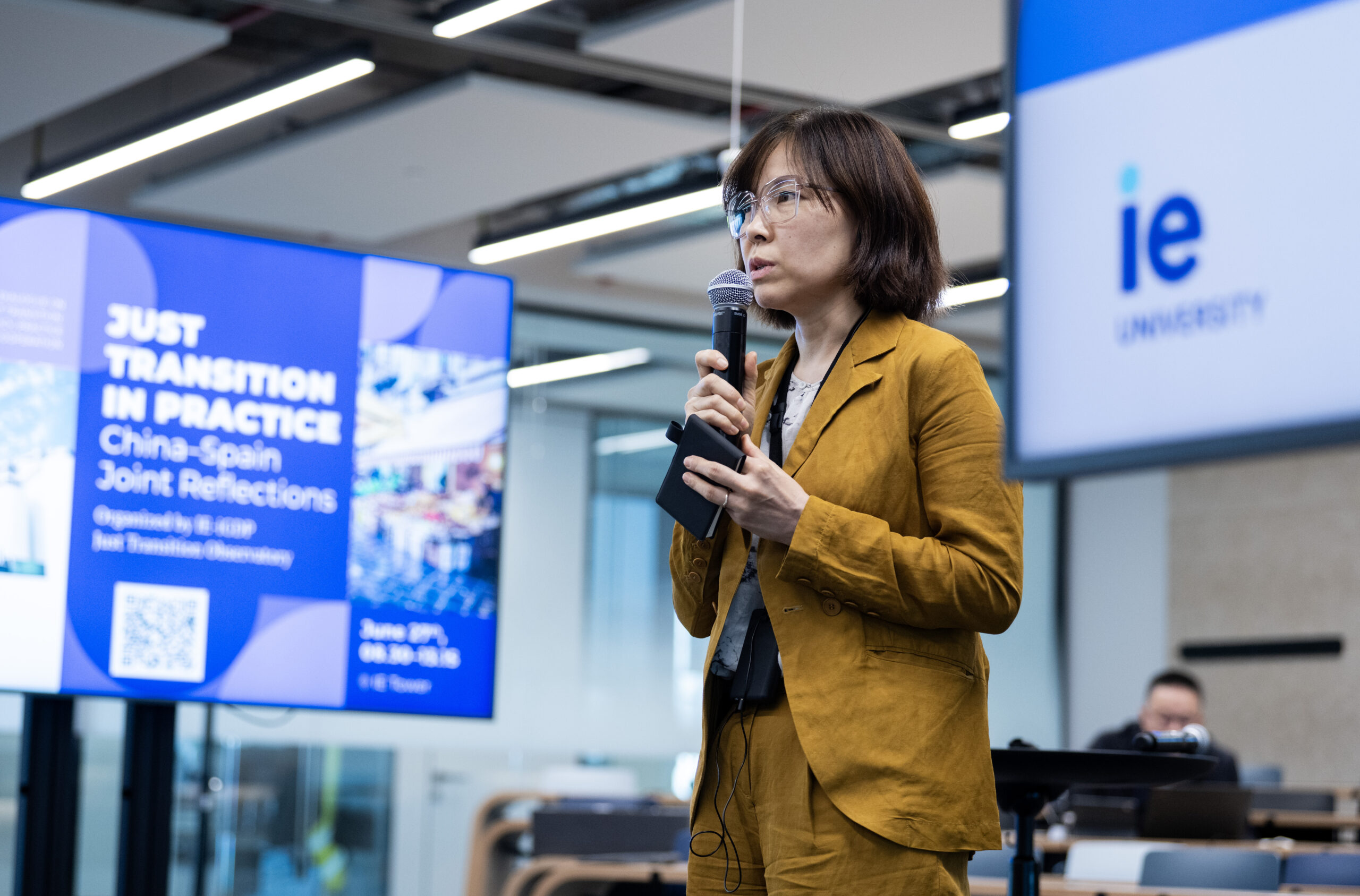
On 27 June, the IE–iGDP Just Transition Observatory (JTO) hosted a workshop in Madrid to strengthen international collaboration between China and Spain on Just Transition experiences. A Just Transition ensures that the shift to a low-carbon economy is fair and inclusive, protecting workers and communities while advancing climate goals.
The event was held, at IE Tower, with representatives from institutions, academia, civil society, trade unions, and the private sector to foster mutual learning on how to implement just transitions. The workshop served as a platform for discussing the ongoing coal phase-out processes in both countries and the strategies being deployed to support workers, communities, and industries affected by this transformation. The agenda featured two thematic panels:
This workshop is part of IE-iGDP Just Transition Observatory mission to act as a bridge between countries and sectors, promoting applied research and knowledge exchange in order to promote a just, inclusive, and effective transition. The discussions emphasized the need for cooperation, inclusive governance models, and long-term planning to ensure that no one is left behind in the energy transition.
Participants underscored the importance of upskilling workers, fostering dialogue with community and labor representatives, and enhancing private and public agreements to accelerate the just transition. In the framework of the IE–iGDP Just Transition Observatory, the event concluded with a shared commitment to deepen collaboration, promote joint workshops, and identify scalable solutions to advance a fair and equitable transition away from fossil fuels.
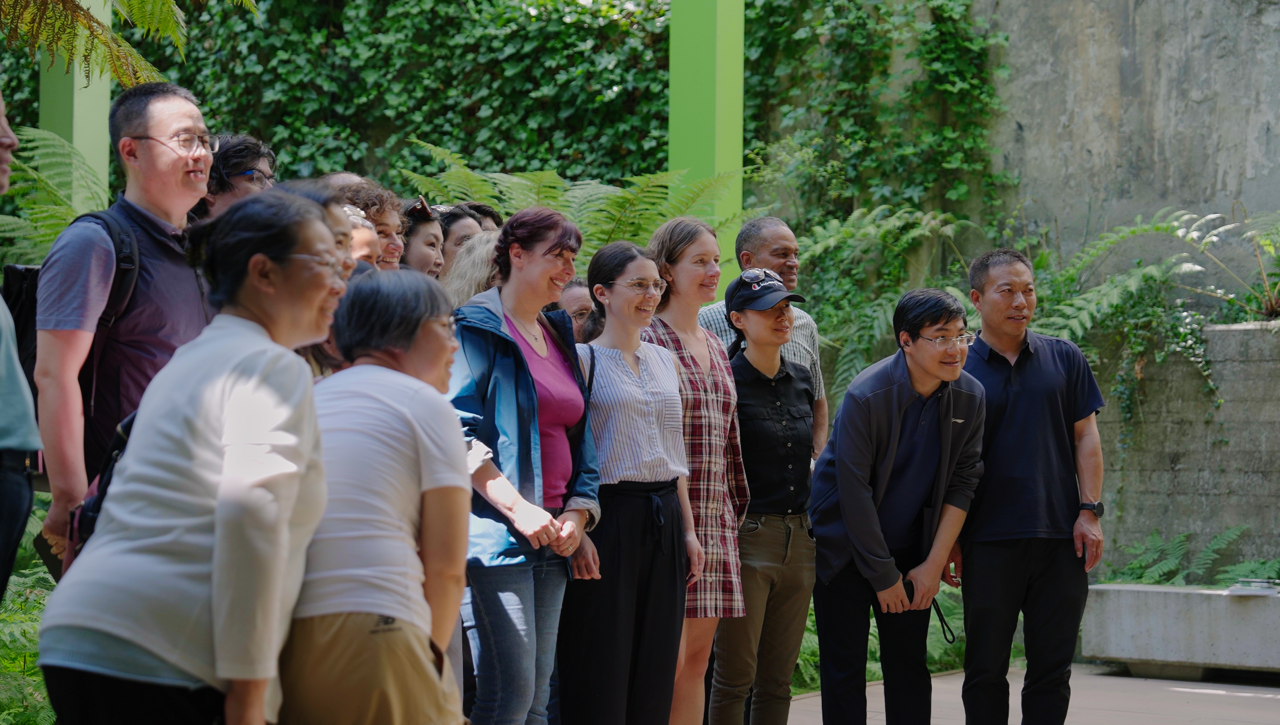
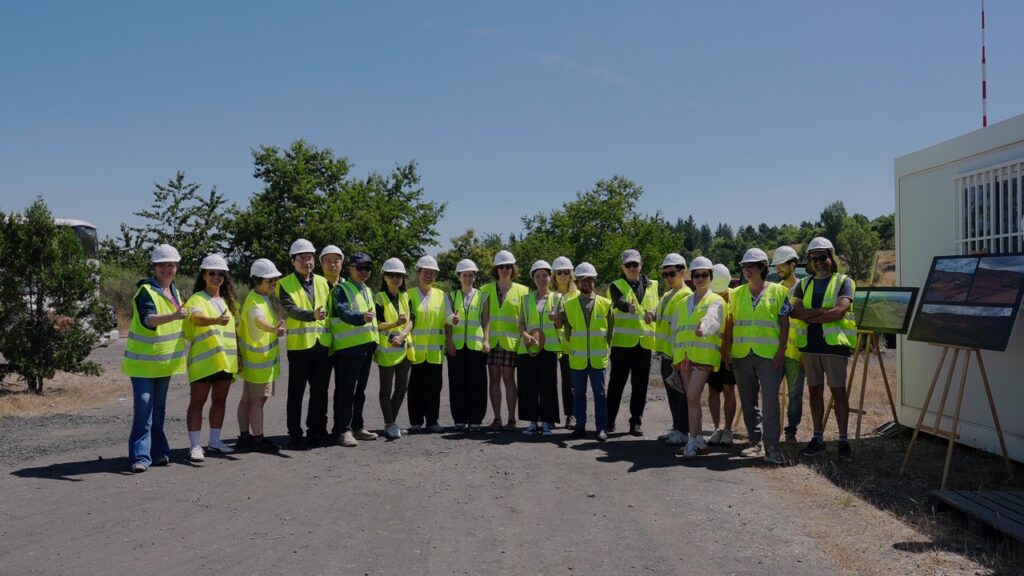
On 28 June, representatives of the Chinese delegation, accompanied by members of the IE–iGDP Just Transition Observatory (JTO), conducted a field visit to Ponferrada, León to explore concrete examples of Just Transition implementation in Spain. This visit was designed to showcase successful public initiatives in energy innovation, territorial revitalization, and cultural heritage recovery in regions affected by coal phaseout.
Organized in collaboration with local agents and hosted by the City of Energy Foundation (CIUDEN), the visit offered a first-hand look at how public institutions are leveraging science, innovation, and social policy to support coal phase-out while promoting economic diversification and community resilience.
The day began with a guided tour of the Technology Development Center (CIUDEN R&D&I) in Cubillos del Sil. This center houses semi-industrial facilities dedicated to green hydrogen, solar energy, and battery storage. Participants learned about the site’s role in renewable energy development and workforce reskilling initiatives, particularly in the training of former fossil fuel workers.
The delegation then visited Gran Corta Fabero, a former open-pit coal mine site. The area is now part of an initiative that employs former miners in ecosystem restoration efforts, representing a symbolic shift from extractive industries to environmental rehabilitation. The project is funded by the European Union through the Recovery and Resilience Facility – NextGenerationEU, as part of the Government of Spain’s Recovery, Transformation and Resilience Plan, under the Just Transition Strategy (Component 10, Investment 1). It is administered by the Junta de Castilla y León, with the Sociedad Pública de Infraestructuras y Medio Ambiente de Castilla y León (SOMACYL) serving as project manager, and Grupo TRAGSA, a public company, responsible for executing the construction work. This transition effort is coordinated by both public and private sector stakeholders and aligns with the broader strategy led by the Just Transition Institute of Spain
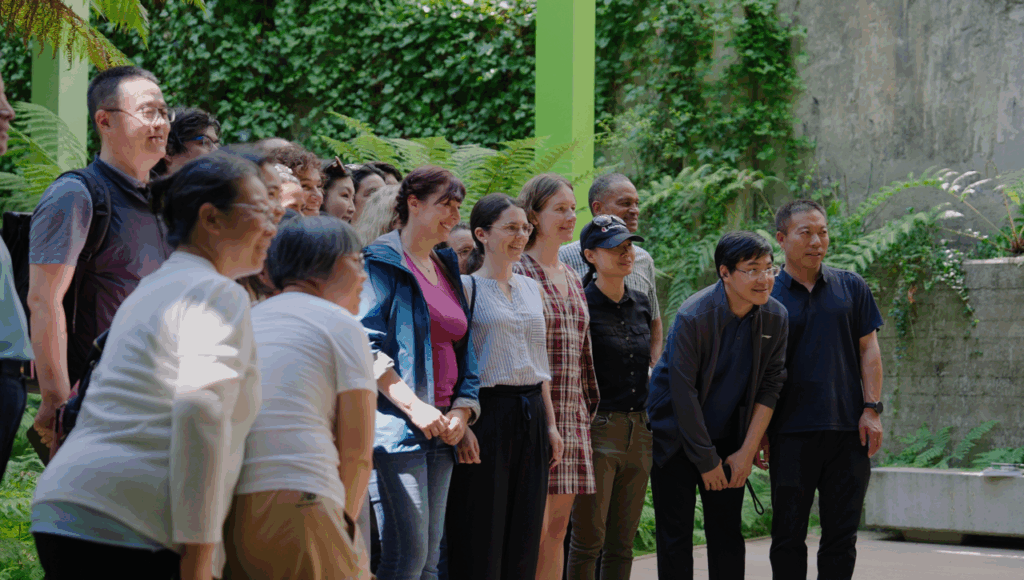
The afternoon included a cultural and educational dimension. The group explored La Fábrica de Luz – Museo de la Energía, a former coal power plant now transformed into a museum and community hub. They also visited the Cultural Thermal Power Plant (Compostilla I), recently converted into a center for arts, training, and social innovation. These spaces represent how industrial heritage can be reimagined to foster local culture, education, inclusive development, and a reminder of the community’s past dependence on coal.
This field visit emphasized the importance of integrating technological innovation, cultural preservation, and community engagement into Just Transition strategies. Within the framework of the IE–iGDP Just Transition Observatory, the experience reaffirmed the value of hands-on exchanges to inspire new pathways for global cooperation, regional regeneration, and socially inclusive transition.
We use both our own and third-party cookies to enhance our services and to offer you the content that most suits your preferences by analysing your browsing habits. Your continued use of the site means that you accept these cookies. You may change your settings and obtain more information here. Accept